

31 Oct 2024
Post by Midwest Money Mentor
Onward on our journey to credit mastery (and saving money)!
Alright, hopefully you read “Making Your Credit Scores Magnificent – Part 1” already so you understand how big of an impact having good credit can be on your financial growth. It is another aspect of the “Optimize” steps I discuss in the educational curriculum you should be using (hopefully). If you can optimize your credit scores, you can do many things such as:
- Get out of debt quicker – if you are not paying as much interest to lenders as the average American, you can have more money available to get out of debt quicker. Less debt equals even less money going to interest (this creates a compounding circle effect, the more debt you get rid of the less interest you pay, and the more money you can put towards getting rid of debt due to paying less interest, which creates you paying even less interest because of even less debt, creating even more money to pay off debt, and onward you go until you are out of debt.)
- Invest more money quickly – if you are not paying as much interest to lenders as the average American, and you are getting rid of the debt holding your money hostage, you can then also have more money to invest and build more wealth quickly. This is another beautiful compounding circle effect. The less interest you pay to lenders, the more money you have to pay off debt, which in turn provides you more money because it allows you to invest that money that was going toward debt instead, which creates you more money as the money grows with your investments over time. Money creating money creating money.
- Build your Net Worth faster (your ticket to financial freedom)- if you are not paying interest like the average American, you can pay off your debt faster. If you are paying less interest and have less debt, your net worth is increasing due to less liabilities in the liabilities portion of your net worth calculator. On top of that, if your debt is gone, you have more money you can invest, which is increasing your assets portion of your net worth calculation, improving your finances very quickly.
- Invest More Easily in Real Estate – one of the major components of initially investing in Real Estate traditionally entails receiving financing to be able to acquire the real estate. Though financing can take on many directions, the better your credit scores, the more likely you are to qualify for traditional financing and also pay less interest costs on that financing. This expands your investment opportunities, lowers your costs of owning the real estate, increases your likelihood of creating more income from the property, and improves your likelihood of acquiring more properties to expand your investments.
I used a lot of the same words, circularly and maybe confusingly, in those paragraphs. It made perfect sense to me, but if it was confusing to you, that is perfectly fine, and probably just means you are not as big of a self-proclaimed nerd as I am. To sum up those paragraphs above, I want you to pay less interest so you can pay off your debt quickly, and then when you are out of personal debt, I want you to invest the money so you can make money from your investments in your sleep. I find people sleep more soundly that way (note to self, find a way for doctors to prescribe financial freedom to people who have anxiety and sleep issues).
Alright, let’s jump into learning about what the credit bureaus look at so you can actually make your credit scores magnificent instead of reading my rambles. To start, a quick reminder that the areas the credit bureaus look at are:
- Total Accounts/Credit Mix –
- Length of Credit History –
- Recent Credit Inquiries –
- Revolving Credit Utilization –
- And Credit History –
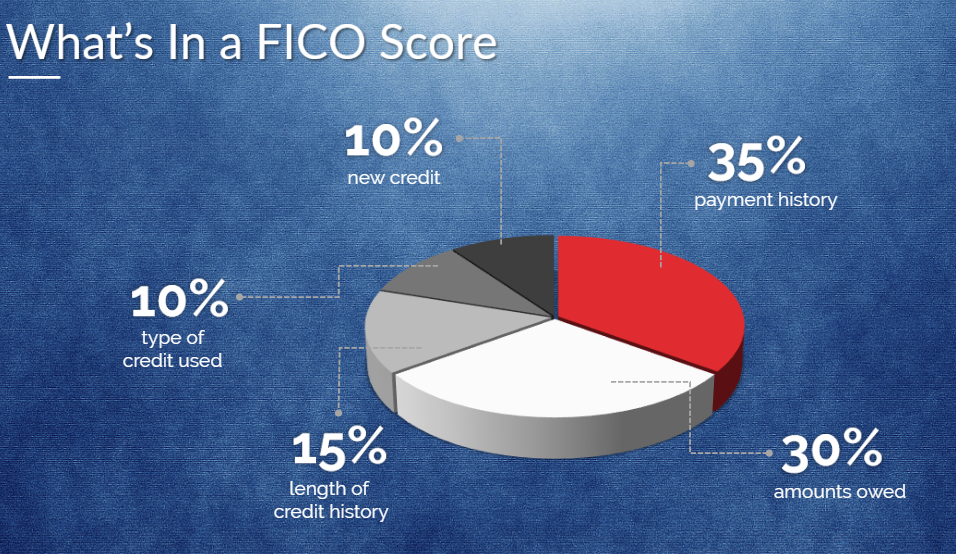
For this blog post, we will cover the first few and then the remaining ones will get knocked out in “Making Your Credit Scores Magnificent – Part 3”.
Total Accounts and Credit Mix – This portion of your credit makes up 10% (roughly) of your credit score.
This is going to blow your mind, but the credit bureaus score part of your credit score based on how many credit accounts you have had and the types of credit accounts you have had. Ok, so that hopefully did not blow your mind, and honestly, a lot of these pieces we discuss won’t be mind blowing. But, most people still don’t know the breakdowns, so though most of this won’t explode your cranial matter, it will still be helpful to save you money (which is the point of all of this).
Creditors want to know that you can successfully manage a large history of credit accounts and a good variety of different types of credit so that they know that regardless of the debt type you are applying for or using, you will use the account correctly.
There are really two overarching types of credit accounts, and they are:
- Installment Loans –
- And Revolving Credit –
With an installment loan, you borrower money once, and then you pay that loan off over a pre-determined time period (or sooner). You should think in your head of car loans, student loans, personal loans, mortgages, etc. These types of loans are often not described as good or bad (like credit cards, which are most often crucified in the financial world), but are more regularly viewed as more of necessities to some extent. You do not have $400,000 hanging around in your bank account? Then you can acquire a mortgage debt to fund the purchase of a home.
Having a number of installment loans throughout your credit history shows you are capable of regularly making payments on time (unless of course you do not make payments on time or with regularity, which needs to be changed immediately), and opens up the door to acquire these loan times with more ease and with better interest rates in the future. What should be an obvious note with these loans is, though they are looked at less harshly by the general world, these debts cause just as much havoc for the average person as any other debt. You are still bound to make these payments regardless of good times or bad, so DO NOT overleverage yourself by purchasing more than you need. If good times turn to bad and you can no longer make a high payment towards these accounts, you are then in position to lose your car, your house, or whatever collateral the loan is against. Make sure that you not only can make minimum payments on any loan you take out, but can easily afford to make extra payments to keep your finances and your credit strong.
The biggest aspect of the installment loans in regards to credit scores is that you make the payments on-time throughout the life of the loan, not much else is required. So, if you have had late payments, make sure it never happens again by having autopayments set up, and money in your bank.
With Revolving Credit, these accounts are ones that theoretically are always available. You can use the account, pay it off, and then use the account again without having to open up a new debt or close the original account once it is paid down to zero. You should likely think of credit cards, lines of credit, etc. Once again, the credit bureaus want to see that you have used these accounts, paid everything on time, and managed the balances successfully.
Simple act to improve your credit in this credit category? If you have never had an installment loan or a credit card, get one so that you show a history with that credit type. You do not need to go into massive debt (and should not) or anything, just make sure you have used each type at some point, and pay off both quickly to have the least amount of interest cost possible.
Length of Credit History – This portion of your credit makes up 15% (roughly) of your credit score.
Simple info, the longer you have had credit, the better. How long you have had credit is important because the longer your credit history the easier it is for the credit bureaus to find data to create credit scores for lenders.
FICO scores are going to take into account the age of your oldest credit account, the age of your newest credit account, and the average age of all of your credit accounts in determining this scoring.
So, things that help your credit scores in this area are going to be time (the older your accounts get from when you opened them, the longer your credit history), less new accounts being opened (that is because new accounts can lower the average age of your credit history), and keeping your older accounts open (in this instance they would likely either need to be mortgage accounts or credit cards as those have the longest potential lifespan).
For the next part (part 3 – credit inquiries/pulls/checks, revolving utilization, and credit history) jump over to “MAKING YOUR CREDIT SCORES MAGNIFICENT – PART 3”.
For these initial two, let’s recap.
To improve your credit scores by 25% (10% with total accounts and credit mix, and 15% with length of credit history), you should do these things:
- Make sure you have used or are using both types of credit (installment loans and revolving credit).
- If you have never opened a credit account, do so asap (simple credit card for instance) to start building your credit length.
- Over time, try to open less credit to help out the average length of credit stay longer instead of shortening it with new credit accounts.
- With the oldest account that you can, try to keep it open to continue extending the age of your oldest open account. This likely is going to be a credit card due to fact that there is no time frame that it needs to be paid off or closed. This does not mean keep a balance on the credit card, but use it periodically to keep it active and show credit activity.


0 Comments